RoomSpark · 2025–2026
Defining the standard for the $830B home transformation industry.
I designed an AI-powered iOS app that turns a single room photo into shoppable interiors—saving people weeks of design time and thousands of dollars.
The brief
- Role
- Product designer, leading discovery through launch
- Scope
- AI-powered iOS interior design app, from research to MVP and go-to-market
- Team
- Product designer, developer
- Timeline
- November 2025 – April 2026
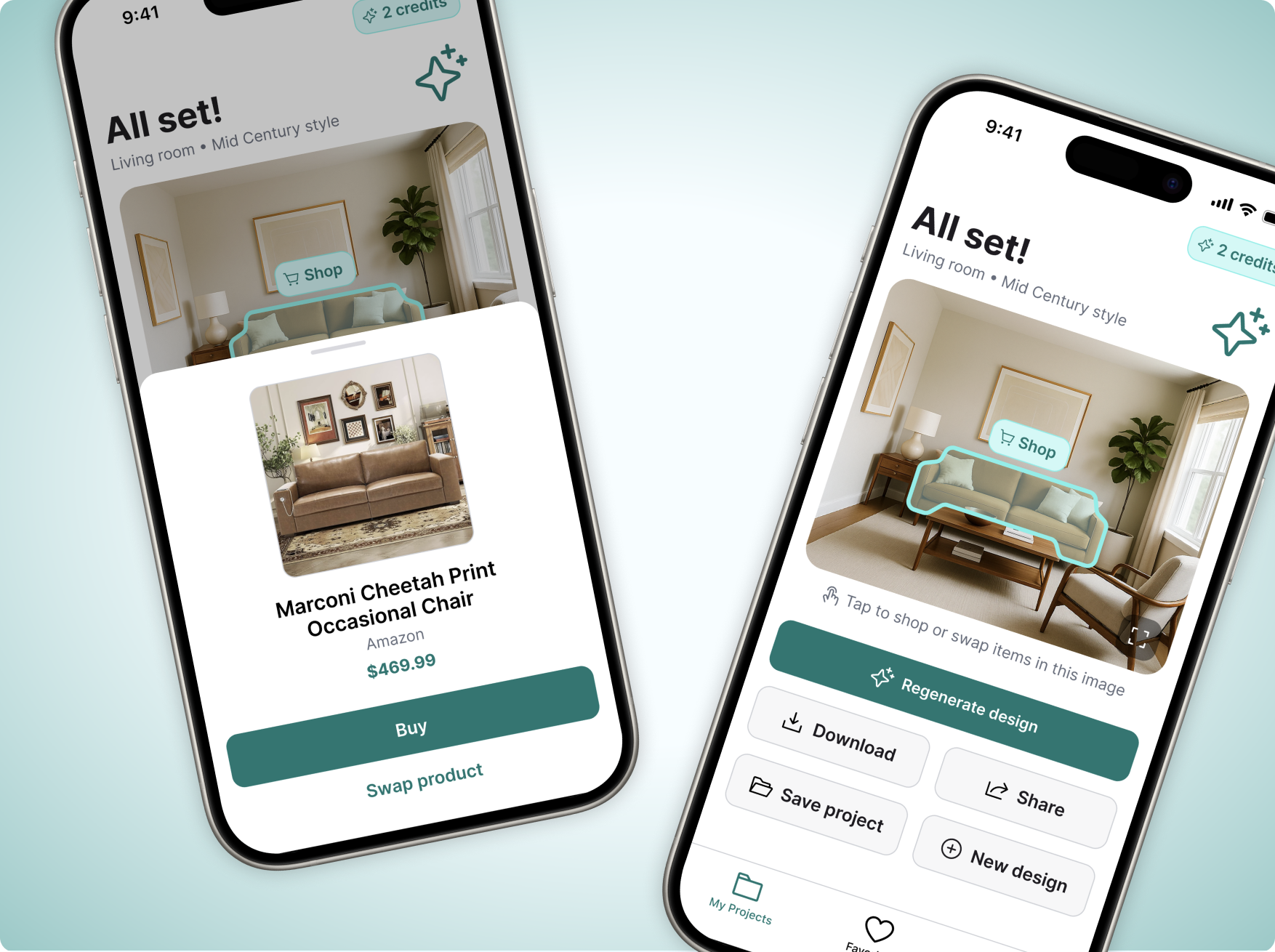
Project overview
RoomSpark is an iOS app that uses AI to make interior design effortless.
As lead designer and product manager, I bridged the gap between complex AI and everyday usability by crafting a seamless, intuitive interface that brings any design vision to life.
Key features
AI-Powered Room Design
Advanced AI algorithms analyze room dimensions, lighting, and user preferences to generate personalized design recommendations.
3D Visualization
Real-time 3D rendering allows users to see their design concepts come to life before making any physical changes.
Intuitive Interface
Streamlined user experience that makes complex design tools accessible to users of all technical skill levels.
Seamless Integration
Connect with furniture retailers, contractors, and design professionals directly through the app.
Design process
Research & discovery
Wireframing & prototyping
UI design & iteration
Development collaboration
Research and discovery
I conducted an expansive competitor analysis, synthesizing App Store reviews, interface teardowns, and community discussions on Reddit. By mapping out common user frustrations, I identified four critical market gaps:
Lack of visualization
Users couldn't bring the room to life in a real, tangible way.
Budget constraints
Difficulty managing costs during the design process.
Spatial uncertainty
Users struggled to visualize scale and fit.
Paralysis of choice
A clear lack of guidance on where to begin.
Wireframing & prototyping
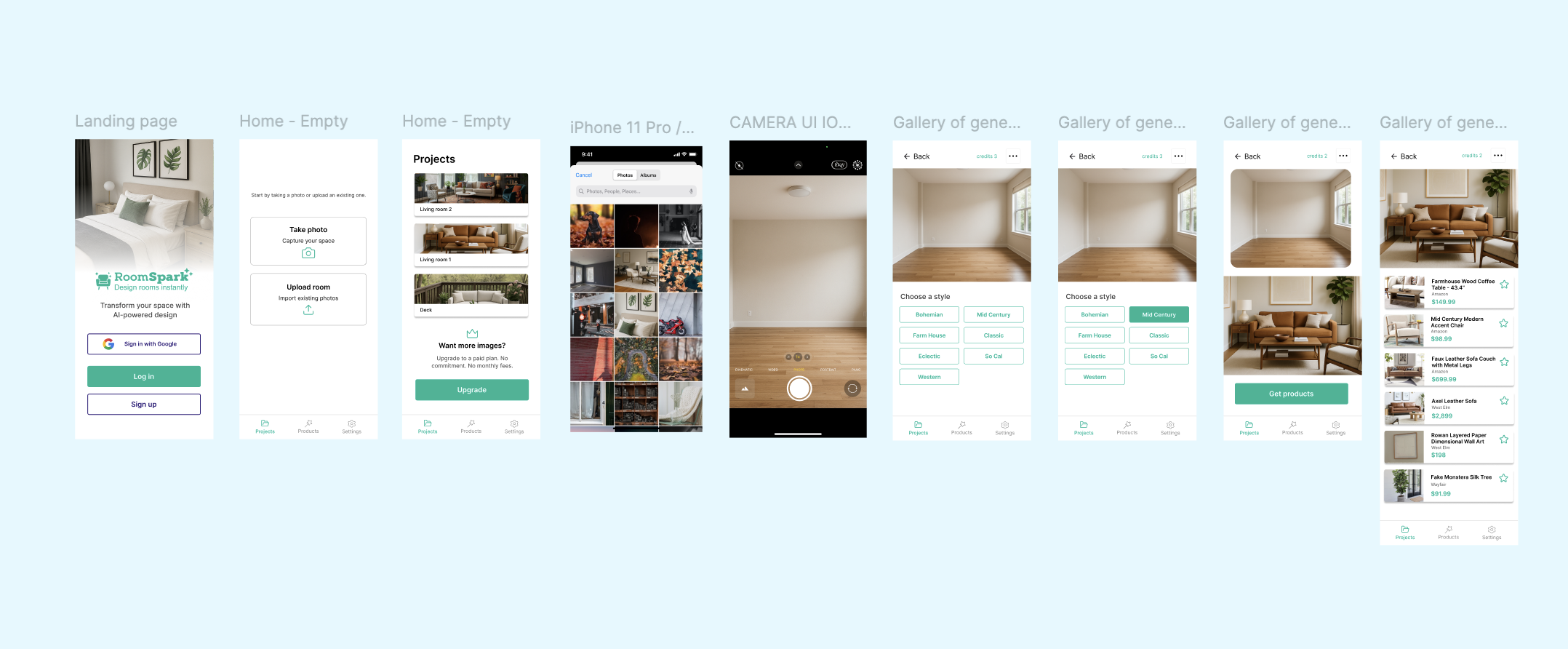
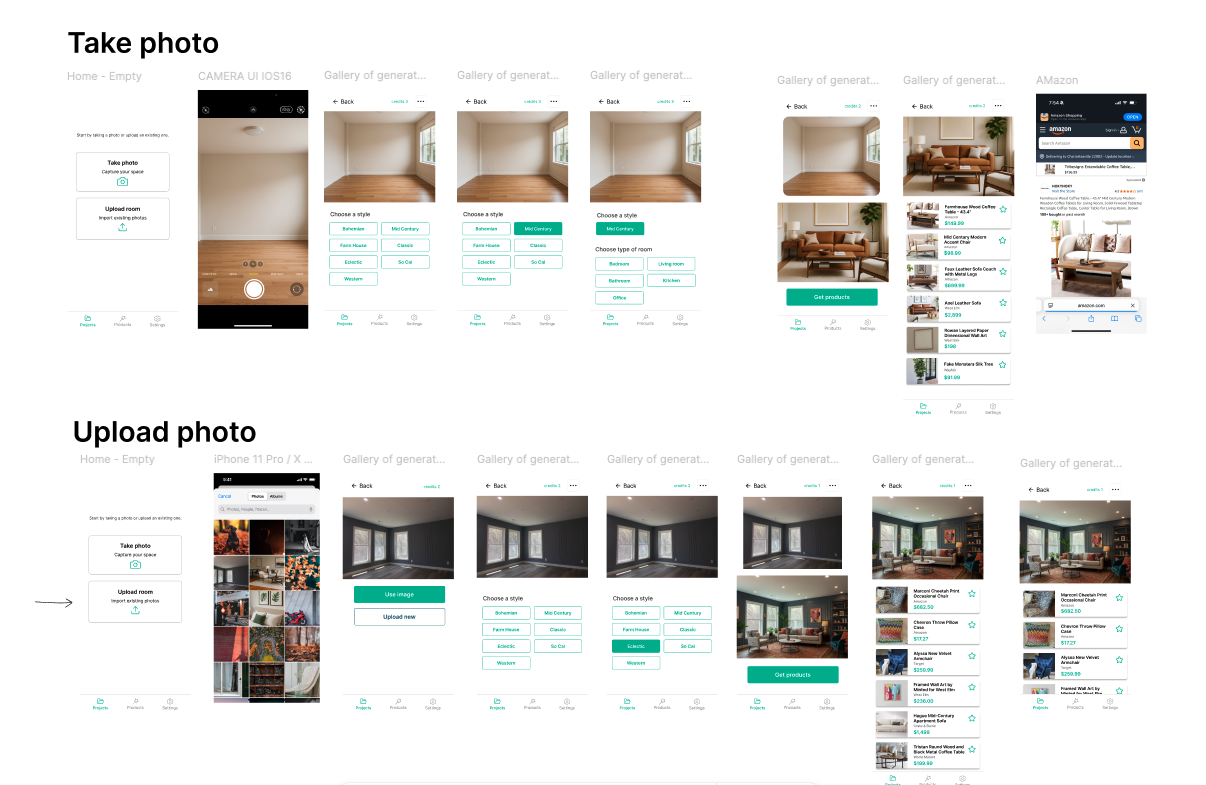
To establish the MVP (Minimum Viable Product), I wireframed a simplified workflow centered on four key steps: Capture, Generate, View, and Purchase. By linking the generated designs to a list of shoppable products via Amazon's affiliate program, I ensured the design solved a user problem while serving as a functional revenue-generating platform.
The Challenge: Amazon Affiliate account closure due to strict 180-day '3-sale' rules. The Action: Proactively audited and re-engineered the affiliate workflow to ensure full compliance and a successful restart.
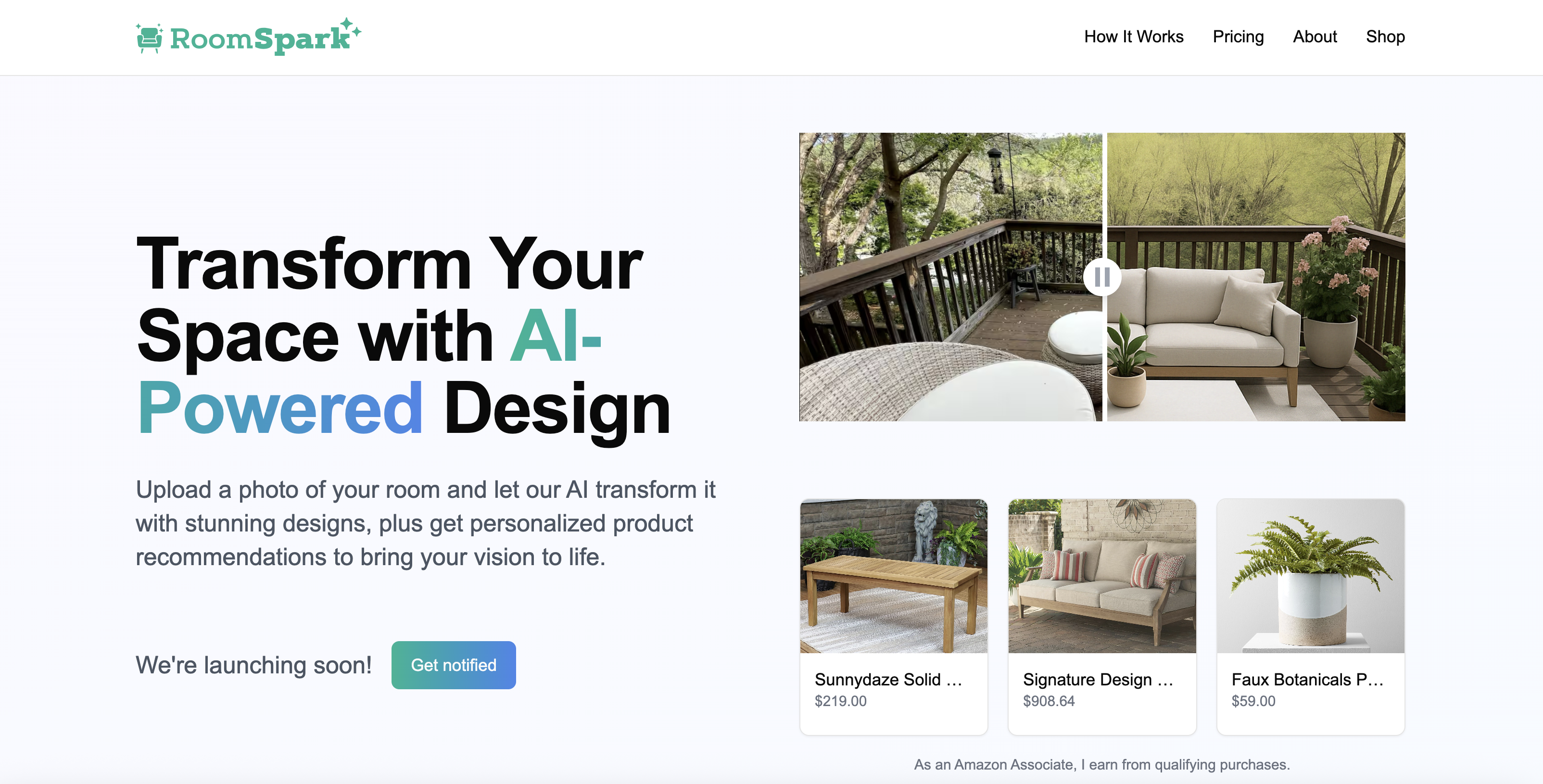
Gathering interest with a landing page
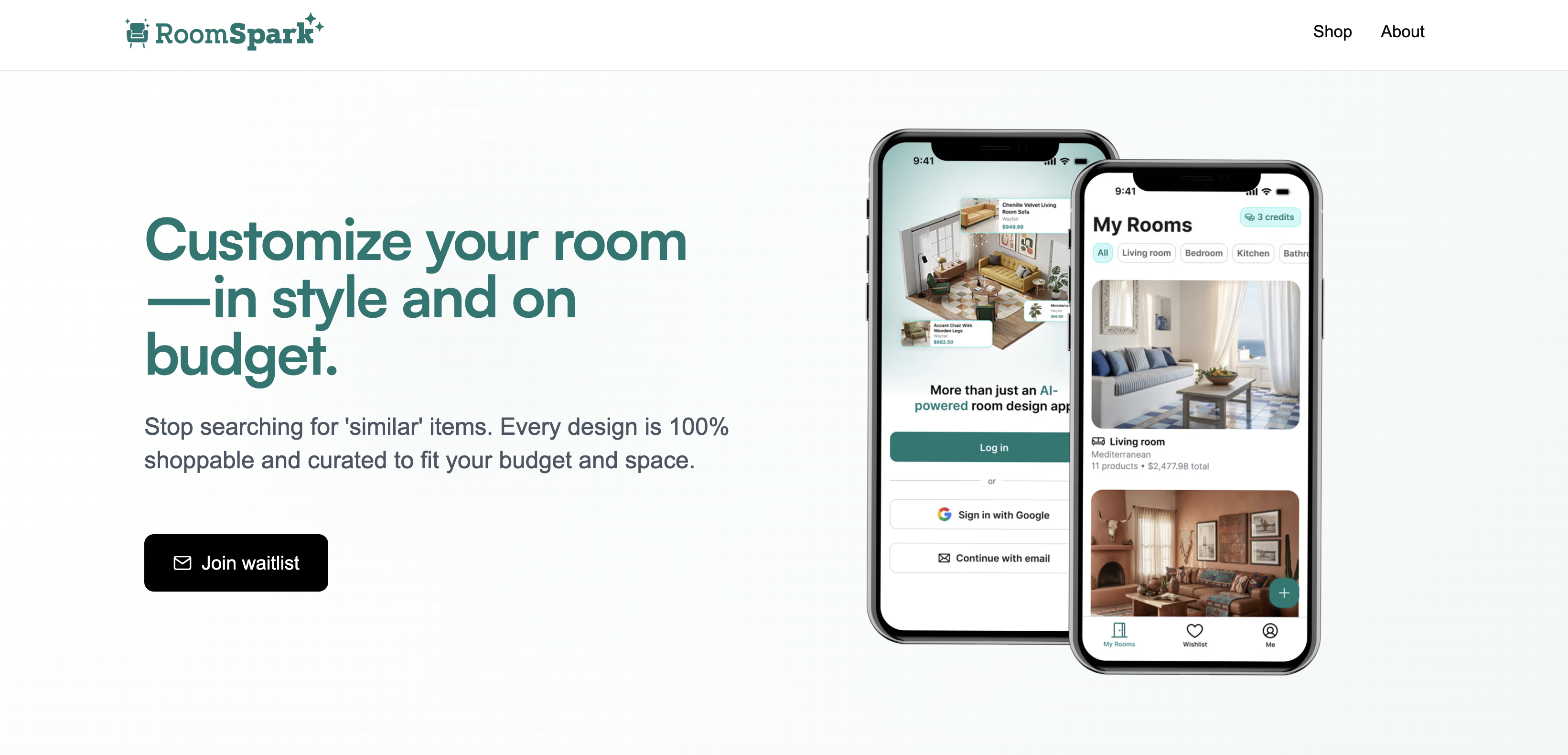
To validate market demand, I launched a pre-launch landing page with a Zoho-integrated CRM waitlist. This strategy allowed me to measure authentic user interest and build early momentum before finalizing the build.
UI design and iteration
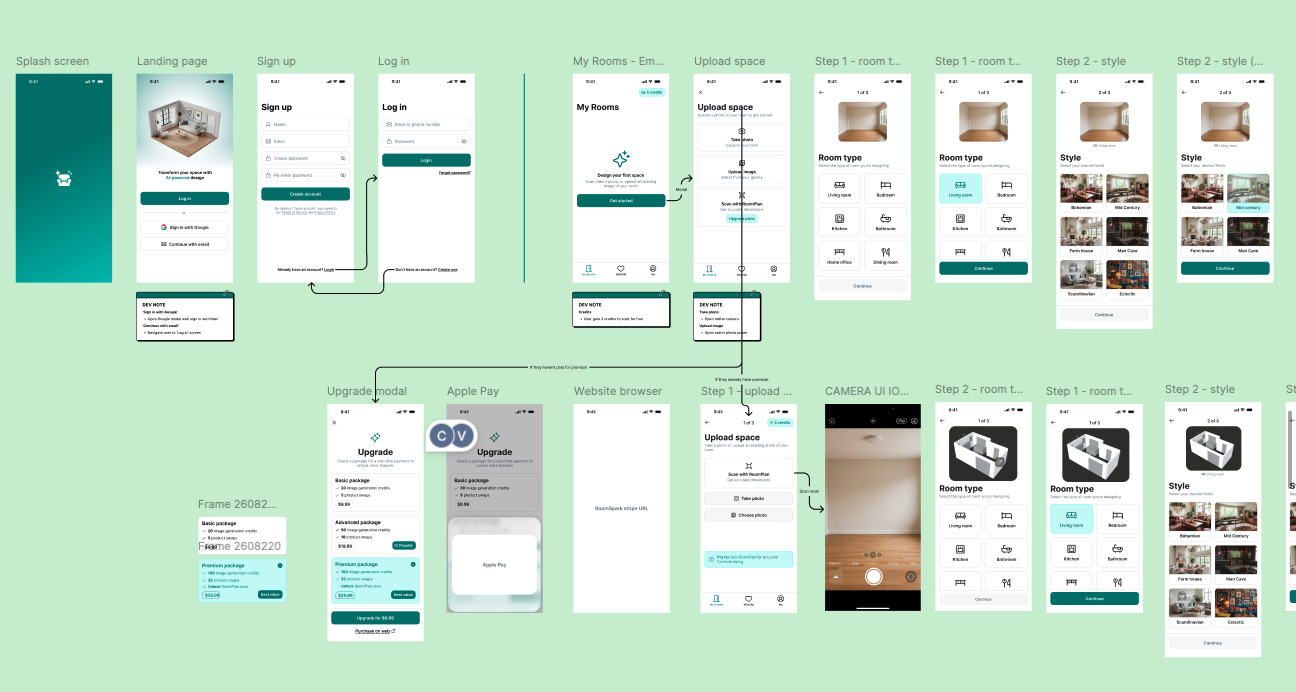
The next step was a full UI refresh. The interface evolved significantly improving clarity and usability, while I simultaneously built a feature roadmap to break our larger vision into focused, shippable releases. Below is the updated UI.
Before
After
Next steps
We broke the work into a Now / Next / Later roadmap so the team could ship an MVP, learn from real users, then sequence the bigger bets.
Shipping
Now
MVP
Upload and capture photos with AI-generated room designs and product suggestions.
0–3 months
Next
App Store launch
Begin real-world user testing and feedback collection.
Website launch
Introduce the product and onboarding flow.
3–9 months
Later
UI refresh + paywall
Support monetization and premium features.
Room scanning
Add precise room measurements via scanning API.
Feature refinement
Polish interactions and improve overall performance.
Future vision
The Next Chapter: RoomSpark B2B
E-Commerce Plugin: Transforming RoomSpark into a Shopify plugin so merchants can let shoppers visualize products in their actual homes before buying.
In-Store QR Tech: Bringing the app into physical retail spaces to drive acquisition. Shoppers scan a floor QR code, upload a room photo, and instantly see the exact item in their space.
Shopify & web plugin
A “See in my room” button on every product page. Customers upload a photo and see the merchant's product in their space.
In-store QR codes
Scan a RoomSpark QR code in a physical store, upload a room photo, and visualize that item at home—turning store traffic into confident purchases.
Customer acquisition in stores
Integrating RoomSpark into retail floors gives shoppers a reason to try the product on the spot, captures new users, and helps small businesses convert in-store interest into online sales.